

Why KS Nutripharma®
Reliable Supply Chain & Certified Manufacturing
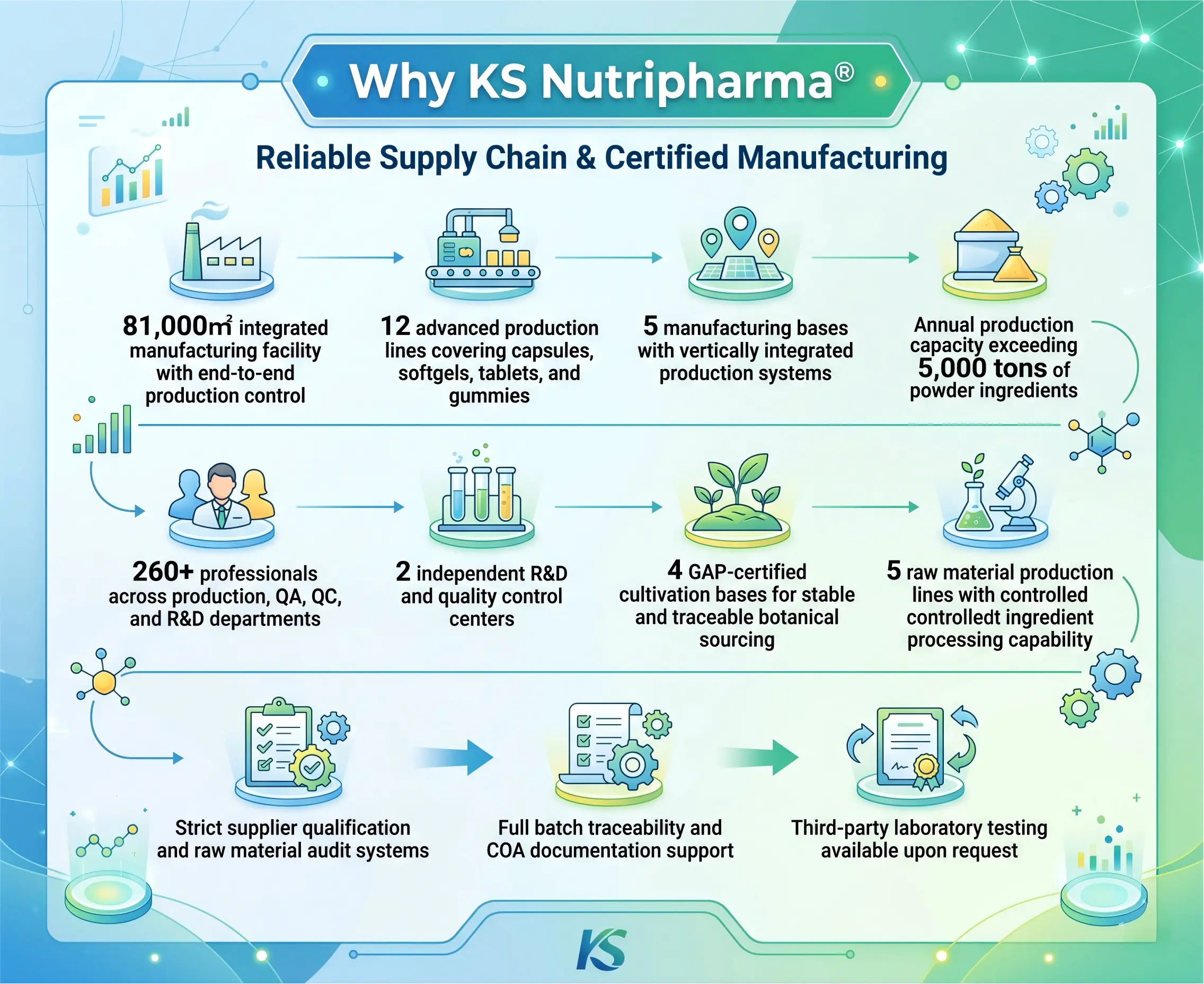
- 81,000㎡ integrated manufacturing facility with end-to-end production control
- 12 advanced production lines covering capsules, softgels, tablets, and gummies
- 5 manufacturing bases with vertically integrated production systems
- Annual production capacity exceeding 5,000 tons of powder ingredients
- 260+ professionals across production, QA, QC, and R&D departments
- 2 independent R&D and quality control centers
- 4 GAP-certified cultivation bases for stable and traceable botanical sourcing
- 5 raw material production lines with controlled ingredient processing capability
- Strict supplier qualification and raw material audit systems
- Full batch traceability and COA documentation support
- Third-party laboratory testing available upon request
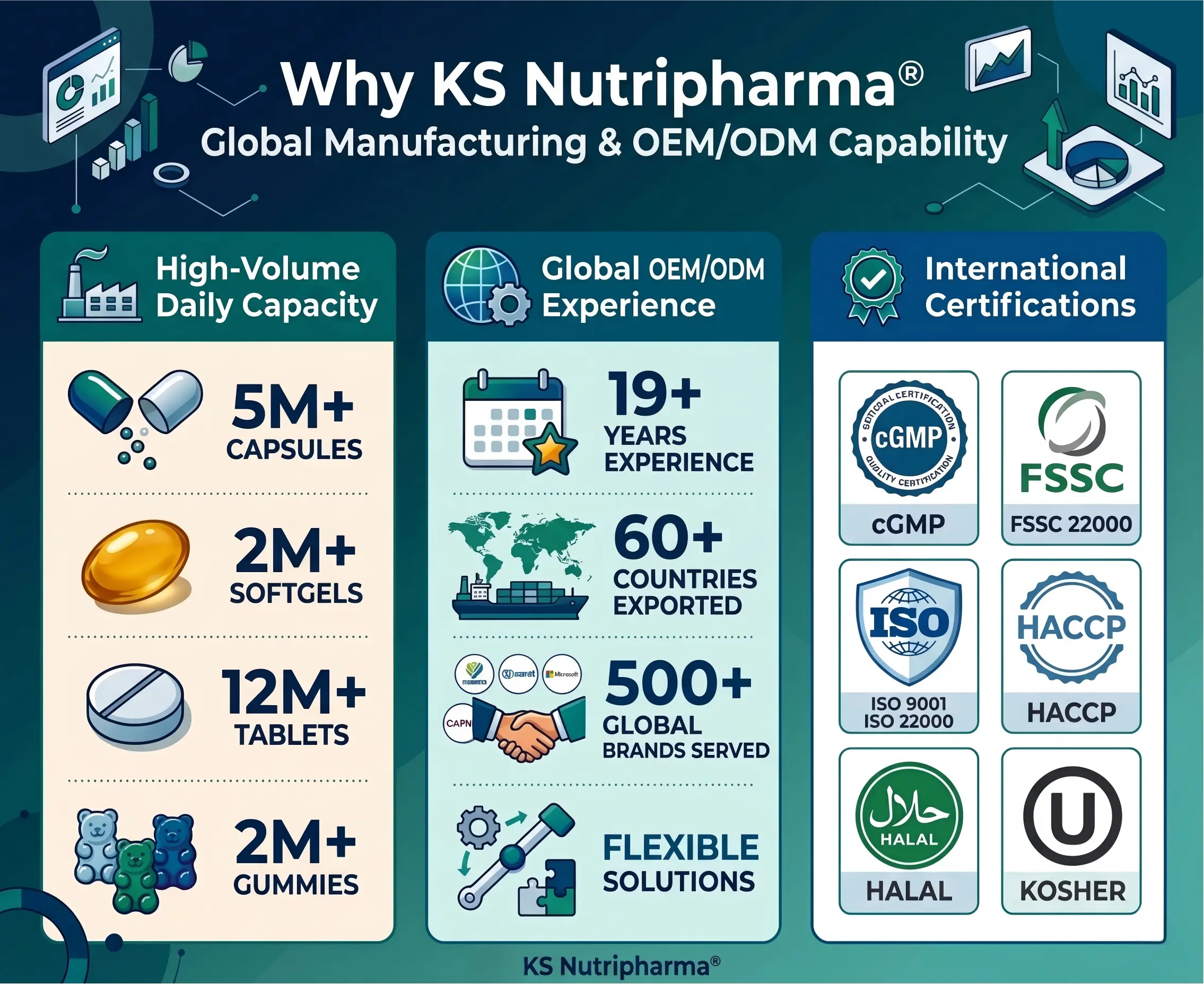
High-Volume Daily Production Capacity
- 5,000,000+ capsules per day
- 2,000,000+ softgels per day
- 12,000,000+ tablets per day
- 2,000,000+ gummies per day
Global OEM/ODM Commercialization Capability
- 19+ years of supplement manufacturing experience
- Exported to 60+ countries
- Serving 500+ global supplement brands
- Flexible OEM/ODM and private-label solutions
- Low MOQ to large-scale commercial production
- Multi-market regulatory documentation support
- Packaging and labeling coordination support
- Long-term supply-chain planning capability
International Certification Systems
Certified under: cGMP/ISO 22000/ ISO 9001/HACCP/FSSC 22000/HALAL/KOSHER
Immune Support Powder Contract Manufacturer for Functional Immune Drink Systems & Daily Immune Beverage Solutions
Modern consumers increasingly prefer immune support powders because they combine hydration, convenience, rapid dispersion, and daily wellness integration into highly adaptable functional beverage systems.
Compared with traditional capsules and tablets, immune drink powders are increasingly positioned as:
- daily wellness beverages
- hydration + immunity systems
- travel-friendly nutrition formats
- rapid-dissolving immune support
- stick-pack convenience systems
- lifestyle wellness drink products
However, immune support powders are also among the most technically demanding nutraceutical dosage forms to manufacture consistently at commercial scale. Unlike tablets or capsules, beverage powders must maintain:
- rapid dissolution performance
- flavor consistency
- powder flowability
- moisture resistance
- transportation stability
- active ingredient uniformity
- long-term shelf-life performance
while still delivering acceptable beverage texture and consumer taste experience.
For B2B brands, the real challenge is not simply “making a powder.” The challenge is developing a commercially scalable beverage system that remains stable during manufacturing, international shipping, warehouse storage, and repeated consumer use.
Real consumer discussions across Reddit, Amazon reviews, and Quora increasingly focus on:
- gritty mouthfeel
- poor cold-water dissolution
- zinc metallic aftertaste
- excessive sweetness
- sour flavor imbalance
- powder clumping after opening
- unstable probiotics
- weak active ingredient dosages
- sedimentation problems
- artificial sweetener concerns
Consumers now expect immune powders to behave more like premium beverage systems than conventional supplement products.
KS Nutripharma supports scalable OEM/ODM manufacturing for functional immune powders through beverage-system engineering, rapid-dispersion optimization, moisture-control technologies, flavor masking systems, stick-pack engineering, and multi-ingredient compatibility development.
Available formats include:
- stick packs
- sachets
- instant drink powders
- effervescent systems
- hydration + immunity blends
- botanical wellness beverages
- functional mushroom drink powders
POPULAR FORMULAS
Common Ingredient Architecture
- Vitamin C
- Zinc citrate
- Electrolyte systems
- Natural citrus flavor systems
Typical Market Positioning
- Daily immune hydration
- Travel wellness support
- Functional hydration beverages
- Everyday nutritional drink systems
Key Commercial Challenges
Most Vitamin C + Zinc beverage systems encounter stability and taste issues during scale-up production.
Common problems include:
- zinc metallic aftertaste
- acid-mineral instability
- moisture-triggered clumping
- flavor degradation over shelf life
- poor dissolution in cold water
Technical Development Focus
- Zinc taste masking systems
- Acid-mineral compatibility engineering
- Rapid dissolution optimization
- Moisture-control stabilization
- Beverage mouthfeel balancing
Common Ingredient Architecture
- Elderberry extract
- Vitamin C
- Berry concentrates
- Natural flavor systems
Typical Market Positioning
- Botanical immune beverages
- Berry antioxidant wellness drinks
- Seasonal wellness products
- Daily hydration nutrition systems
Key Technical Risks
Botanical beverage powders frequently encounter:
- anthocyanin instability
- color fading during storage
- sedimentation after mixing
- moisture sensitivity
- flavor volatility
Technical Development Priorities
- Anthocyanin stabilization systems
- Botanical sedimentation control
- Powder flowability optimization
- Moisture migration reduction
- Flavor balancing technologies
Common Ingredient Architecture
- Vitamin C
- Zinc gluconate
- Electrolyte systems
- Effervescent acid-base complexes
Typical Market Positioning
- Fast-dissolving immune drinks
- Portable wellness systems
- High-compliance hydration products
- Functional beverage nutrition systems
Commercial Manufacturing Challenges
Effervescent systems remain highly sensitive to humidity and packaging integrity.
Common risks include:
- premature acid-base reactions
- reduced fizz intensity over time
- moisture-triggered instability
- compression cracking
- transportation-related degradation
Technical Development Focus
- Controlled-humidity production
- Effervescence stabilization engineering
- Acid-base compatibility control
- Moisture-barrier packaging systems
- Rapid-dissolution optimization
Common Ingredient Architecture
- Reishi mushroom extract
- Beta-glucan systems
- Vitamin C
- Adaptogenic botanical blends
Typical Market Positioning
- Adaptogenic immune wellness
- Functional mushroom beverages
- Daily resilience nutrition
- Stress-support hydration systems
Common Technical Challenges
Functional mushroom powders frequently create beverage-performance problems including:
- mushroom bitterness
- earthy aftertaste
- poor dispersibility
- sedimentation
- flavor incompatibility with minerals
Technical Development Focus
- Mushroom bitterness masking
- Powder dispersibility optimization
- Botanical compatibility engineering
- Beverage flavor-system balancing
- Moisture-control stabilization
1. SUPPLEMENT MARKET SEGMENTATION
The immune support powder market is rapidly evolving from simple vitamin drink mixes toward advanced functional beverage systems focused on:
- hydration integration
- daily convenience
- rapid nutrient delivery
- beverage-quality sensory experience
- clean-label positioning
- portable wellness consumption
Modern consumers increasingly seek:
- convenient daily immune beverages
- hydration + immunity systems
- rapid-dissolving drink powders
- low-sugar wellness beverages
- travel-friendly nutrition formats
- stick-pack supplement systems
- clean-label drink powders
At the same time, Reddit discussions and retail reviews consistently reveal dissatisfaction with:
- gritty texture
- poor dissolution
- metallic zinc flavor
- excessive sweetness
- powder clumping
- unstable probiotics
- flavor inconsistency
- weak active loading
For B2B brands, these consumer frustrations directly impact:
- repeat-purchase rates
- Amazon reviews
- subscription retention
- retailer acceptance
- long-term SKU performance
KS Nutripharma supports multiple immune powder market segments through beverage-system engineering, moisture-control technologies, flavor optimization systems, and scalable OEM/ODM manufacturing.
Designed for consumers seeking convenient wellness support integrated into hydration routines.
Common Positioning
- Daily immune hydration
- Functional beverage nutrition
- Everyday wellness drinks
- Portable nutrition systems
- Lifestyle wellness powders
Common Ingredient Directions
- Vitamin C
- Zinc citrate
- Electrolytes
- Citrus flavor systems
Commercial Manufacturing Challenges
- zinc metallic aftertaste
- powder-flow instability
- flavor-acid imbalance
- moisture absorption
- cold-water dissolution inconsistency
Focused on plant-based immune wellness positioning through berry extracts and botanical antioxidant systems.
Common Positioning
- Botanical immune support
- Berry antioxidant beverages
- Seasonal wellness drinks
- Natural hydration nutrition
- Plant-based supplement systems
Common Ingredient Directions
- Elderberry extract
- Acerola cherry
- Vitamin C
- Berry concentrates
Key Technical Risks
- anthocyanin degradation
- botanical sedimentation
- color instability
- moisture sensitivity
- flavor volatility during storage
Designed for consumers seeking fast-dissolving beverage systems with strong convenience and hydration positioning.
Common Positioning
- Fast-dissolving wellness beverages
- Portable immune drink systems
- Functional hydration products
- Convenient daily nutrition
Common Ingredient Directions
- Vitamin C
- Zinc gluconate
- Electrolyte systems
- Effervescent acid-base complexes
Major Technical Challenges
- moisture-triggered instability
- acid-base reaction control
- compression sensitivity
- packaging compatibility risk
- flavor balancing complexity
Designed for consumers increasingly connecting immune wellness with stress management and recovery support.
Common Positioning
- Stress-support immunity
- Adaptogenic wellness beverages
- Daily resilience nutrition
- Functional mushroom drinks
- Lifestyle immune support
Common Ingredient Directions
- Reishi extract
- Beta-glucan systems
- Cordyceps extracts
- Adaptogenic botanical blends
Major Technical Challenges
- mushroom bitterness
- powder dispersibility
- botanical interaction instability
- flavor masking difficulty
- moisture-control balancing
2. FUNCTIONAL INGREDIENT SYSTEMS
Functional immune drink powders increasingly require ingredient architectures capable of balancing:
- beverage functionality
- rapid dispersion
- flavor quality
- nutrient stability
- moisture resistance
- shelf-life consistency
- commercial manufacturing reproducibility
Unlike capsules, beverage powders expose ingredients directly to moisture, oxygen, acids, sweeteners, and repeated consumer handling.
This creates greater formulation complexity involving:
- acid-mineral interactions
- hygroscopicity control
- flavor compatibility
- sedimentation behavior
- dissolution consistency
KS Nutripharma supports immune beverage development through flavor-system engineering, rapid-dispersion technologies, moisture-control systems, and scalable powder manufacturing solutions.
Vitamin C remains one of the most commercially important ingredients within immune beverage systems due to strong consumer recognition and hydration compatibility.
Common Functional Directions
- Vitamin C beverage systems
- Zinc-enhanced immune drinks
- Electrolyte hydration blends
- Citrus wellness powders
Current Market Trends
- hydration + immunity positioning
- low-sugar drink systems
- travel wellness powders
- stick-pack nutrition products
- daily beverage supplementation
Key Technical Challenges
- zinc metallic flavor
- acid-mineral interaction instability
- moisture sensitivity
- nutrient degradation
- flavor deterioration over shelf life
Technical Support Areas
- Flavor masking technologies
- Mineral compatibility engineering
- Moisture-control systems
- Rapid-dispersion optimization
- Shelf-life stabilization strategies
Botanical ingredients increasingly support antioxidant positioning and plant-based wellness appeal within beverage supplements.
Common Ingredient Directions
- Elderberry extract
- Acerola cherry powder
- Citrus bioflavonoids
- Berry antioxidant systems
Commercial Positioning
- Botanical immune beverages
- Natural antioxidant systems
- Plant-based hydration nutrition
- Berry wellness drinks
Technical Development Priorities
- anthocyanin stabilization
- botanical sedimentation reduction
- flavor balancing
- color consistency management
- powder-flow optimization
Functional mushrooms and adaptogens are increasingly associated with resilience, recovery, and stress-support positioning.
Common Ingredient Directions
- Reishi mushroom extract
- Beta-glucans
- Cordyceps systems
- Adaptogenic botanical blends
Commercial Positioning
- Functional mushroom nutrition
- Stress-support beverages
- Daily resilience systems
- Adaptogenic wellness drinks
Major Technical Challenges
- mushroom bitterness
- dispersibility limitations
- botanical interaction instability
- flavor suppression complexity
- moisture sensitivity
Technical Focus Areas
- bitterness masking technologies
- suspension optimization
- botanical compatibility engineering
- flavor-system balancing
- powder stability management
3. FORMULATION STRATEGY & PRODUCT ARCHITECTURE
Successful immune support powders increasingly require formulation systems designed around beverage performance rather than simple ingredient stacking.
The real commercial challenge is developing formulations that remain:
- stable during transportation
- consistent across production batches
- easy to dissolve in cold water
- pleasant to drink daily
- scalable for long-term manufacturing
KS Nutripharma develops immune beverage formulations based on ingredient compatibility, moisture stability, dispersion behavior, and commercial-scale reproducibility.
Designed for consumers seeking convenient wellness beverages with strong daily compliance and hydration compatibility.
Development Priorities
- Rapid dissolution performance
- Flavor-system optimization
- Daily-use convenience
- Nutrient stability
- Powder-flow consistency
- Cold-water mixing performance
Common Ingredient Systems
- Vitamin C
- Zinc citrate
- Electrolytes
- Citrus flavor systems
Commercial Risks Commonly Addressed
- sedimentation after mixing
- zinc aftertaste complaints
- powder hardening during storage
- inconsistent fill-weight performance
- flavor drift during shelf life
Focused on plant-based wellness positioning through berry antioxidants and botanical ingredient systems.
Technical Focus Areas
- Botanical stability balancing
- Flavor masking optimization
- Powder dispersibility
- Moisture-control engineering
- Color consistency management
- Sedimentation reduction systems
Suitable Ingredient Directions
- Elderberry extract
- Acerola cherry powder
- Berry concentrates
- Citrus bioflavonoids
Commercial Challenges Frequently Encountered
- botanical flavor volatility
- anthocyanin degradation
- powder segregation
- moisture-triggered caking
- transportation-related color instability
Modern consumers increasingly prioritize beverage experience alongside functionality.
Consumer reviews repeatedly show that taste and mixing performance strongly influence repeat purchase behavior.
Product Development Focus
- Smooth mouthfeel systems
- Reduced grittiness
- Balanced acidity
- Rapid mixing performance
- Low-sugar optimization
- Reduced medicinal aftertaste
Popular Delivery Formats
- Stick packs
- Sachets
- Effervescent powders
- Functional beverage systems
Why This Matters Commercially
Poor beverage experience often leads to:
- negative Amazon reviews
- low subscription retention
- weak repeat-purchase behavior
- retailer delisting risk
KS Nutripharma prioritizes beverage-quality sensory performance together with manufacturing scalability during formulation development.
4. DOSAGE FORM & DELIVERY SYSTEM SOLUTIONS
Functional immune drink systems are significantly more complex than conventional capsules or tablets. Beverage powders must remain stable under fluctuating humidity, transportation stress, flavor degradation, and repeated consumer handling while still delivering rapid dissolution and consistent sensory performance.
For B2B buyers, the biggest commercial risks are not only formulation instability, but also:
- clumping during warehouse storage
- stick-pack leakage during transportation
- flavor deterioration before shelf-life expiration
- inconsistent fill weights at commercial scale
- sedimentation after reconstitution
- rising rejection rates from Amazon and retail channels
- consumer complaints related to poor dissolution or gritty mouthfeel
KS Nutripharma develops dosage-form systems based on ingredient behavior, market positioning, logistics requirements, and commercial scalability — not simply based on ingredient blending.
Stick packs remain one of the fastest-growing formats for immunity beverages due to portability, single-dose accuracy, and strong compatibility with e-commerce and subscription models.
However, stick-pack systems frequently fail at scale because many immune ingredients are highly hygroscopic and sensitive to oxygen and moisture exposure.
Suitable Applications
- Daily immune drink powders
- Vitamin C + Zinc systems
- Travel wellness products
- Functional hydration beverages
- Mushroom immunity blends
- Electrolyte + immunity combinations
Common Manufacturing Risks
- Powder hardening during sea freight
- Seal failure caused by fine-powder contamination
- Filling inconsistency from poor powder flowability
- Flavor oxidation during long-term storage
- Static electricity affecting filling precision
- Agglomeration in humid climates
Engineering Focus Areas
- High-barrier multilayer stick-pack materials
- Nitrogen-flush packaging systems
- Water activity (Aw) management
- Particle-size distribution optimization
- Anti-caking carrier systems
- Flowability enhancement for high-speed filling lines
- Hygroscopic ingredient isolation strategies
What B2B Buyers Usually Overlook
Many factories can produce stable samples, but large-scale commercial runs often encounter:
- increased caking after container shipment
- inconsistent dissolution between batches
- flavor drift after 3–6 months
- seal defects during high-speed filling
- unstable powder density causing fill-weight deviation
KS Nutripharma validates stick-pack performance under simulated transportation and accelerated stability conditions before commercial production.
Commercial Advantages
- Higher consumer compliance
- Better portability for daily-use products
- Strong Amazon and DTC compatibility
- Reduced serving errors compared with scoop powders
- Better SKU differentiation for premium wellness positioning
Instant drink powders require much more than “rapid dissolution.” Commercial success depends heavily on beverage texture, sediment control, flavor layering, and long-term powder stability.
Consumers increasingly compare immune drink powders with ready-to-drink beverages rather than traditional supplements.
Suitable Applications
- Daily immune hydration systems
- Functional vitamin beverages
- Adaptogenic drink powders
- Botanical wellness blends
- Lifestyle nutrition beverages
Key Technical Challenges
- Sedimentation after mixing
- Floating botanical particles
- Poor cold-water dispersion
- Chalky or sandy mouthfeel
- Flavor separation during storage
- Vitamin degradation in acidic systems
Technical Development Priorities
- Instantization technology optimization
- Suspension stabilization systems
- Multi-phase flavor balancing
- Particle-density engineering
- Beverage clarity optimization
- Controlled foaming performance
- pH-sensitive nutrient stabilization
Commercial Manufacturing Considerations
For large-scale beverage powder production, formulation reproducibility becomes critical.
Small changes in:
- humidity
- particle size
- sweetener ratios
- flavor carrier systems
- mineral loading
can dramatically affect dissolution behavior and consumer perception.
KS Nutripharma evaluates commercial-scale mixing behavior rather than relying solely on laboratory prototypes.
Effervescent powders are among the most technically demanding dosage forms in nutraceutical manufacturing.
While they provide superior consumer experience and fast-dissolving functionality, they are highly vulnerable to moisture-triggered instability and acid-base incompatibility.
Common Commercial Problems
- Premature effervescent reactions during storage
- Tube swelling caused by humidity ingress
- Reduced carbonation performance over time
- Compression cracking during transportation
- Acid-mineral interaction instability
- Flavor imbalance caused by acidic overload
Critical Engineering Controls
- Controlled-humidity production environments
- Low-moisture raw material selection
- Effervescence reaction timing control
- Acid-base separation engineering
- Moisture-resistant packaging validation
- Compression-pressure optimization
- Desiccant integration systems
Packaging Risks Frequently Ignored
Many OEM failures occur not during manufacturing, but after export shipment.
High humidity exposure during international logistics may trigger:
- premature tablet expansion
- reduced fizz intensity
- texture degradation
- flavor deterioration
KS Nutripharma performs packaging compatibility verification under simulated transportation and climate conditions.
Suitable Commercial Applications
- Travel wellness products
- Portable immunity beverages
- Fast-dissolving hydration systems
- Sports immunity drink systems
- High-compliance daily wellness products
Sachets support larger serving volumes and more flexible dosage architectures compared with stick packs.
They are commonly used for family-format nutrition systems and multi-serving beverage products where cost efficiency and serving flexibility are priorities.
Suitable Applications
- Multi-serving immune beverages
- Family wellness drink systems
- Hydration support powders
- Functional nutrition blends
- Bulk-format retail beverage systems
Technical Priorities
- Powder homogeneity at higher fill weights
- Transportation durability under stacking pressure
- Moisture migration prevention
- Flavor retention during extended storage
- Accurate serving consistency across batches
Commercial Advantages
- Better cost-performance structure
- Larger beverage serving flexibility
- Improved international shipping efficiency
- Strong compatibility with retail wellness channels
- Better scalability for high-volume production
5. REGULATORY & GLOBAL COMPLIANCE FRAMEWORK
For immune beverage powders, regulatory risk does not come only from prohibited ingredients. Most compliance failures originate from:
- unsupported immunity claims
- improper botanical naming
- non-compliant sweetener declarations
- inaccurate active dosage labeling
- regional differences in ingredient restrictions
- unstable potency over shelf life
KS Nutripharma supports regulatory coordination from formulation design through export documentation and commercial labeling review.
Manufacturing systems operate under internationally recognized frameworks including:
- cGMP
- ISO 22000
- ISO 9001
- HACCP
- FSSC 22000
- HALAL
- KOSHER
However, certification alone does not guarantee commercial compliance.
For immune drink powders, formulation architecture, packaging systems, and stability validation are equally important for regulatory risk management.
B2B buyers increasingly require analytical transparency for Amazon compliance, retailer onboarding, and import clearance.
Available support may include:
- COA documentation
- Active-ingredient verification
- Heavy metal screening
- Microbiological testing
- Stability evaluation
- Allergen statements
- Non-GMO declarations
- Moisture-content analysis
- Water activity testing
- Dissolution-performance validation
- Packaging compatibility assessment
Additional High-Risk Areas Often Requested by Buyers
- Vitamin potency retention over shelf life
- Zinc-content verification consistency
- Microbial control for botanical powders
- Hygroscopic ingredient stability
- Transportation-condition simulation
Many immune beverage brands face commercialization delays due to labeling inconsistencies rather than manufacturing problems.
Support Areas May Include
- Supplement Facts review
- Ingredient compliance evaluation
- Regional claim-risk assessment
- Packaging compliance coordination
- Export documentation support
- Multi-market label adaptation
Common Compliance Risks
- Overstated immune claims
- Incorrect botanical Latin naming
- Improper sweetener disclosures
- Non-compliant sugar positioning
- Zinc dosage exceedance in specific markets
- Unsupported “clinically proven” language
KS Nutripharma coordinates formulation feasibility together with commercial claim safety during product development.
Different markets require different formulation and labeling strategies.
Supported Markets Include
- North America
- Europe
- Southeast Asia
- Middle East
- Latin America
Common Commercial Channels
- Amazon supplement brands
- Functional beverage startups
- Cross-border e-commerce
- Retail wellness programs
- Private-label nutrition brands
- Pharmacy and specialty retail systems
6. ADVANCED MANUFACTURING & DELIVERY TECHNOLOGY
Immune beverage powders increasingly require manufacturing systems capable of handling:
- hygroscopic ingredients
- acidic formulations
- flavor instability
- rapid-dissolution expectations
- transportation stress
- high-speed filling compatibility
The largest gap between laboratory samples and commercial production is reproducibility at scale.
KS Nutripharma focuses on scalable process engineering rather than “sample-only optimization.”
Consumers now expect beverage-grade performance from supplement powders.
Poor dissolution is one of the most common causes of negative reviews in e-commerce channels.
Technical Objectives
- Faster cold-water dissolution
- Reduced sedimentation
- Improved beverage clarity
- Smooth mouthfeel consistency
- Uniform nutrient dispersion
Manufacturing Technologies
- Particle-size optimization
- Instantization processing
- Density-balancing systems
- Controlled agglomeration engineering
- Flowability stabilization
Commercial Benefits
- Better consumer experience
- Reduced customer complaints
- More consistent batch performance
- Improved product reviews and repurchase rates
Moisture remains one of the most critical failure points in immune powder manufacturing.
This is especially important for:
- Vitamin C systems
- Zinc formulations
- mushroom powders
- electrolyte blends
- effervescent products
Major Manufacturing Risks
- Powder caking
- Reduced dissolution performance
- Premature effervescent activation
- Flavor degradation
- Nutrient potency loss
- Fill-weight instability
Engineering Controls
- Controlled-humidity production zones
- Water activity balancing
- Moisture-barrier packaging systems
- Anti-caking carrier engineering
- Low-humidity storage management
Why This Matters Commercially
Many products remain stable in factory conditions but fail after:
- ocean freight
- warehouse humidity exposure
- repeated consumer opening/closing
- tropical-market distribution
KS Nutripharma evaluates stability under real-world logistics scenarios rather than static laboratory storage only.
Immune powders frequently contain ingredients that create strong sensory challenges, including:
- zinc salts
- mushroom extracts
- elderberry concentrates
- herbal adaptogens
- acidic vitamin systems
Poor taste remains one of the leading causes of low repeat-purchase rates.
Technical Priorities
- Zinc metallic-note suppression
- Mushroom bitterness reduction
- Acid-balance refinement
- Sweetness-profile optimization
- Mouthfeel smoothing
- Aftertaste reduction
Applied Technologies
- Layered flavor systems
- Encapsulation-assisted masking
- Acidulant balancing
- Natural flavor harmonization
- Cooling and mouthfeel modulation systems
Suitable Applications
- Zinc immune beverages
- Mushroom drink powders
- Botanical wellness systems
- Effervescent immunity drinks
- Hydration + immunity blends
Modern immune beverage systems increasingly combine:
- vitamins
- minerals
- electrolytes
- botanicals
- mushroom extracts
- acids
- sweeteners
- flavor systems
These combinations often create instability risks at commercial scale.
Critical Technical Focus Areas
- Acid-mineral interaction control
- Nutrient segregation reduction
- Blend homogeneity validation
- Hygroscopicity balancing
- Shelf-life consistency engineering
Commercial Importance
Without compatibility engineering, brands frequently encounter:
- inconsistent nutrient distribution
- flavor instability
- visible powder separation
- shortened shelf life
- large batch-to-batch variation
KS Nutripharma develops formulations based on manufacturing reproducibility and long-term commercial feasibility, not only ingredient stacking.
7. MOQ & SCALING MODEL
One of the biggest challenges for emerging beverage brands is balancing low initial inventory risk with scalable manufacturing economics.
Many OEM factories either reject small-volume innovation projects or cannot maintain consistency when scaling.
KS Nutripharma supports staged commercialization models designed for both startup validation and long-term retail expansion.
Production Range
500–1,000 units
Designed For
- Amazon launches
- Formula validation
- Investor presentations
- Market testing
- Seasonal immunity products
- Influencer-led wellness brands
What Buyers Commonly Validate at This Stage
- dissolution performance
- flavor acceptance
- transportation stability
- consumer feedback
- packaging durability
- repurchase potential
Production Range
5,000–10,000 units
Suitable For
- Regional retail expansion
- Cross-border e-commerce
- Functional beverage launches
- Initial distributor onboarding
Commercial Priorities
- supply-chain consistency
- production reproducibility
- packaging scalability
- logistics efficiency
- cost optimization
Production Capacity
100,000+ units per batch
Suitable For
- International distribution
- National retail systems
- Long-term OEM partnerships
- Multi-market wellness programs
Operational Priorities
- stable raw-material continuity
- batch consistency
- production scheduling reliability
- export coordination
- long-term pricing stability
8. PROJECT DEVELOPMENT TIMELINE
Immune beverage development involves significantly more coordination than conventional supplement manufacturing because beverage functionality, sensory performance, and stability must all be validated simultaneously.
Project timelines depend heavily on:
- flavor complexity
- hygroscopic ingredient load
- effervescent architecture
- packaging structure
- market compliance requirements
Estimated Timeline: 3–5 business days
Includes
- product positioning analysis
- ingredient feasibility review
- dosage-form evaluation
- regulatory risk discussion
- commercial-channel assessment
Estimated Timeline: 7–14 business days
Includes
- prototype formulation development
- dissolution optimization
- flavor refinement
- compatibility evaluation
- sensory testing
Typical Buyer Concerns Addressed
- “Will this dissolve in cold water?”
- “Can the mushroom taste be reduced?”
- “Will zinc affect flavor stability?”
- “Can sweetness be lowered without bitterness?”
Estimated Timeline: 2–4 weeks
Includes
- moisture-sensitivity testing
- accelerated stability evaluation
- transportation-condition simulation
- packaging compatibility review
- dissolution consistency assessment
Critical Commercial Value
This phase identifies problems before full-scale production, reducing the risk of:
- post-launch caking
- leakage complaints
- flavor deterioration
- unstable effervescence
- Amazon return issues
Estimated Timeline: 1–2 weeks
Includes
- GMP pilot manufacturing
- filling validation
- powder-flow assessment
- packaging confirmation
- process reproducibility review
Estimated Timeline: 2–4 weeks
Includes
- full-scale production
- packaging execution
- COA generation
- export-document preparation
- batch-release review
Overall Project Cycle: 6–10 weeks
Timeline Variables Include
- flavor-system complexity
- packaging customization
- ingredient sourcing lead times
- effervescent compatibility
- multi-market labeling coordination
Accelerated development pathways are available for priority commercial projects with validated formulations.
9. SUPPLY CHAIN SECURITY & RAW MATERIAL STABILITY SYSTEM
Supply-chain instability has become one of the largest operational risks for immune beverage brands, especially for:
- vitamin systems
- botanical extracts
- mushroom ingredients
- sweeteners
- specialty flavors
Inconsistent raw materials often lead to:
- flavor variation
- dissolution inconsistency
- potency fluctuation
- delayed production schedules
KS Nutripharma operates a multi-layer sourcing and qualification system designed for long-term manufacturing continuity.
Supported ingredient categories include:
- Vitamin C systems
- Zinc raw materials
- Electrolyte complexes
- Mushroom powders
- Botanical extracts
- Flavor-system ingredients
Supply Priorities
- potency consistency
- particle-size stability
- moisture control
- commercial continuity
- scalable procurement feasibility
All suppliers undergo strict qualification procedures including:
- GMP verification
- Specification testing
- Heavy metal screening
- Microbiological evaluation
- Batch consistency assessment
Only approved suppliers enter commercial production systems.
Many beverage ingredients rapidly degrade under humidity exposure.
Technical Controls
- controlled-humidity warehousing
- moisture-barrier storage systems
- temperature-sensitive logistics management
- low-humidity production handling
High-Risk Applications
- effervescent powders
- stick-pack systems
- rapid-dissolution beverages
- electrolyte drink powders
Traceability systems support:
- raw-material origin tracking
- production batch linkage
- COA integration
- retention sample management
- complaint investigation support
This helps buyers strengthen retailer compliance, import transparency, and long-term OEM reliability.
10. R&D & COMMERCIAL FORMULATION ENGINEERING CENTER
Immune beverage R&D requires far more than ingredient blending.
Successful commercialization depends on balancing:
- flavor quality
- dissolution behavior
- moisture stability
- shelf-life performance
- manufacturing feasibility
- cost structure
- regulatory compliance
KS Nutripharma develops formulations based on commercial manufacturability rather than laboratory-only performance.
R&D systems support:
- immune drink powders
- hydration + immunity systems
- botanical wellness beverages
- effervescent formulations
- adaptogenic drink systems
Development Priorities
- rapid dispersion optimization
- flavor-system balancing
- moisture-control engineering
- nutrient stability management
- shelf-life consistency
Consumers increasingly judge immune powders by beverage standards rather than supplement standards.
R&D Focus Areas
- smooth mouthfeel optimization
- grittiness reduction
- sweetness-profile engineering
- acid-balance refinement
- bitterness suppression
- aftertaste minimization
Typical Ingredient Challenges
- zinc metallic taste
- mushroom bitterness
- vitamin acidity overload
- botanical earthy notes
Commercial validation includes:
- prototype formulation development
- ingredient compatibility testing
- accelerated stability review
- packaging validation
- sensory optimization
Key Validation Metrics
- powder flowability
- dissolution performance
- moisture sensitivity
- transportation durability
- flavor retention stability
Every formulation is evaluated for industrial scalability before commercialization.
Scalability Assessment Factors
- raw-material continuity
- blending feasibility
- filling-line compatibility
- packaging adaptability
- long-term manufacturing reproducibility
- cost-performance optimization
This reduces the common industry problem where laboratory prototypes cannot be reliably reproduced at commercial scale.
11. INTELLECTUAL PROPERTY & OEM CONFIDENTIALITY SYSTEM
In the functional immune beverage industry, formulation differentiation increasingly determines brand survival.
Many beverage brands now compete not only through ingredient selection, but through:
- flavor architecture
- rapid-dissolution performance
- mouthfeel optimization
- stick-pack usability
- hydration positioning
- sugar-reduction technologies
- proprietary botanical combinations
One of the biggest OEM concerns is not production capability alone — it is the protection of commercially sensitive formulation knowledge during sampling, scale-up, and long-term manufacturing.
KS Nutripharma operates structured confidentiality and project-isolation systems designed for proprietary beverage powder commercialization.
Confidential development protocols support secure collaboration during formula evaluation, prototype development, and commercial manufacturing.
Available Protection Measures
- NDA-based project management
- restricted formula-access authorization
- client-specific project coding systems
- segmented technical documentation control
- controlled sample circulation procedures
- confidential formulation archiving
Suitable For
- Functional beverage startups
- Retail supplement brands
- Amazon wellness companies
- Regional private-label programs
- Long-term OEM partnerships
- Investor-stage beverage projects
Why This Matters Commercially
Many emerging beverage brands outsource early-stage development before trademark registration or retail launch.
Without confidentiality controls, commercial risks may include:
- unauthorized formula replication
- flavor-system leakage
- ingredient-positioning duplication
- private-label overlap conflicts
- distributor-channel exposure
KS Nutripharma limits internal project visibility based on operational necessity rather than unrestricted department-wide access.
Immune beverage systems increasingly involve proprietary combinations that cannot be protected solely through patents.
Commercial differentiation often depends on manufacturing know-how and process integration.
Protection Systems May Apply To
- Immune drink architectures
- Rapid-dissolution systems
- Flavor-masking technologies
- Effervescent formulations
- Adaptogenic beverage systems
- Hydration + immunity combinations
Controlled Protection Areas
- Ingredient ratio structures
- Flavor layering systems
- Dispersion technologies
- Moisture-control methodologies
- Sweetener-balancing systems
- Product-positioning frameworks
Common OEM Risks Buyers Try To Avoid
- Similar formulas sold to competing brands
- Shared flavor systems across private-label clients
- Unauthorized formula modification
- Replication through uncontrolled supplier exposure
KS Nutripharma supports project-based manufacturing separation for commercially sensitive beverage programs.
Confidentiality risk often increases during production scale-up because more departments, operators, and documentation systems become involved.
Operational control systems help reduce unnecessary internal exposure.
Operational Measures Include
- Restricted production documentation
- Controlled routing authorization
- Internal access-limitation systems
- Client-specific manufacturing coordination
- Segmented batch-record visibility
- Controlled formula-release procedures
Suitable Applications
- Exclusive beverage systems
- Premium wellness brands
- Regional exclusivity programs
- Long-term OEM manufacturing contracts
- High-value retail beverage systems
Commercial Value
These controls help buyers maintain:
- retail differentiation
- distributor exclusivity
- pricing protection
- long-term SKU uniqueness
- channel-level competitive advantage
12. COMMERCIAL MANUFACTURING SUPPORT & LIFE-CYCLE SERVICE
Most immune beverage products do not fail during launch.
They fail after scaling.
As retail distribution expands, beverage powder systems frequently encounter:
- flavor drift over time
- moisture-related caking
- dissolution inconsistency
- packaging-performance decline
- cost-pressure reformulation challenges
- transportation-related instability
KS Nutripharma provides long-term technical and commercial support throughout the product life cycle rather than ending support after shipment.
Commercial beverage systems often require continuous optimization after market feedback and real-world logistics exposure.
Ongoing Optimization Support May Include
- Flavor-system refinement
- Dissolution-performance enhancement
- Moisture-control improvement
- Packaging upgrades
- Cost-structure optimization
- Sweetener-system adjustment
- Mouthfeel refinement
Long-Term Commercial Objectives
- Better shelf-life consistency
- Reduced powder clumping
- Improved consumer experience
- Lower complaint rates
- Enhanced transportation durability
- Better retail-review performance
Typical Scenarios Requiring Optimization
- Formula adaptation for hot-climate markets
- Flavor adjustments after Amazon reviews
- Sugar reduction without taste deterioration
- Packaging upgrades for international shipping
- Ingredient replacement during supply-chain fluctuations
As brands expand, packaging architecture often becomes operationally complex.
KS Nutripharma supports scalable SKU management for growing beverage portfolios.
Support Areas Include
- Multi-SKU product-line coordination
- Retail packaging upgrades
- Subscription-format optimization
- Cross-market packaging adaptation
- Multi-language packaging alignment
Common Expansion Directions
- Immune hydration systems
- Stick-pack travel products
- Functional mushroom beverages
- Effervescent wellness lines
- Family-format nutrition powders
Commercial Challenges Commonly Addressed
- Packaging inconsistency across SKUs
- Inventory inefficiency
- Retail shelf differentiation
- Freight optimization
- Amazon packaging durability requirements
Regulatory environments continue evolving across global supplement and beverage markets.
Brands frequently require formulation or labeling updates after commercialization.
Support Areas Include
- Label-update coordination
- Compliance-document refresh
- Export-document alignment
- Market-specific positioning adaptation
- Testing-document management
Common Commercial Scenarios
- Sweetener replacement projects
- Sugar-reduction reformulation
- Flavor modernization initiatives
- Packaging redesign transitions
- Regional compliance adaptation
Why Ongoing Support Matters
Many OEM relationships fail because factories only support initial production, leaving brands to manage future compliance changes independently.
KS Nutripharma supports long-term operational continuity for evolving retail and e-commerce markets.
Scaling beverage systems internationally introduces new operational complexity involving:
- regional packaging differences
- transportation climates
- distributor requirements
- ingredient continuity
- production scheduling stability
Supported Areas Include
- International market expansion
- Cross-border e-commerce growth
- Multi-channel commercialization
- Long-term OEM coordination
- Multi-market production planning
Suitable For
- Functional beverage brands
- International supplement companies
- Amazon scaling programs
- Multi-SKU wellness portfolios
13. AFTER-SALES TECHNICAL SUPPORT SYSTEM
For immune beverage powders, technical support after shipment is often more important than the initial production itself.
Many commercial issues only appear after:
- international transportation
- warehouse storage
- repeated package opening
- seasonal humidity exposure
- retail shelf circulation
Because beverage powders involve hygroscopic ingredients, acid-mineral systems, botanical extracts, and rapid-dissolution technologies, structured technical coordination is essential for long-term product stability.
Rapid-response coordination helps brands reduce operational disruption when technical issues arise.
Rapid-response support may include:
- Stability inquiries
- Packaging compatibility review
- Logistics-related technical communication
- Batch investigation support
- Transportation-condition assessment
- Dissolution-performance troubleshooting
Support Objectives
- Faster issue identification
- Reduced operational downtime
- Improved communication efficiency
- Reduced distributor escalation risk
Common Concerns
- “Why is the powder hardening after shipping?”
- “Why does dissolution vary between batches?”
- “Can humidity during ocean freight affect stability?”
- “Why did flavor change after long-term storage?”
When deviations occur, identifying the real root cause quickly is critical.
Many powder issues involve multiple interacting factors rather than a single manufacturing defect.
RCA Systems Include
- Cross-functional technical review
- Preliminary diagnosis reporting
- Batch-record investigation
- Packaging evaluation analysis
- Stability-risk assessment
- Corrective-action recommendations
Common RCA Coverage Areas
- Powder clumping
- Dissolution instability
- Flavor degradation
- Moisture-related hardening
- Sedimentation problems
- Effervescence inconsistency
Why RCA Matters
Without structured investigation systems, brands often face:
- repeated batch failures
- distributor disputes
- unresolved consumer complaints
- escalating return rates
KS Nutripharma emphasizes preventive process correction rather than temporary symptom management.
For confirmed manufacturing-related deviations, structured CAPA systems support long-term operational improvement.
Support Areas Include
- Corrective-action implementation
- Preventive quality enhancement
- Batch replacement coordination
- Process-control refinement
- Stability-control optimization
Quality Objectives
- Better powder stability
- Lower recurrence probability
- Improved batch reproducibility
- Enhanced commercial reliability
Commercial Importance
Professional CAPA systems help reduce:
- retailer relationship risk
- Amazon review deterioration
- recurring production deviations
- long-term brand damage
Successful beverage brands typically require continuous technical coordination as their product portfolio expands.
Ongoing Support May Include
- Stability follow-up programs
- Formula-upgrade coordination
- Packaging optimization recommendations
- Raw-material continuity planning
- Production scheduling communication
Suitable For
- International OEM programs
- Long-term beverage brands
- Multi-SKU wellness systems
- Functional drink portfolios
14. QUALITY & COMPLIANCE SYSTEMS
For immune beverage powders, quality control extends far beyond standard microbiological testing.
Because these products involve moisture-sensitive vitamins, acids, minerals, sweeteners, botanical extracts, and rapid-dissolution systems, environmental control and process reproducibility are critical for long-term commercial stability.
KS Nutripharma applies multi-stage quality systems designed specifically for beverage powder manufacturing.
Manufacturing Systems Support:
- cGMP
- HACCP
- ISO 9001 & ISO 22000
- FSSC 22000
- HALAL
- KOSHER
Quality Systems May Include
- Raw-material verification
- Active-ingredient testing
- Heavy metal screening
- Microbiological analysis
- Moisture-content monitoring
- Packaging-integrity inspection
- Batch-consistency evaluation
Additional Beverage-Powder Focus Areas
- Dissolution-performance validation
- Powder-flowability testing
- Flavor-stability monitoring
- Water-activity analysis
- Effervescence consistency verification
- Fill-weight accuracy assessment
Common Failure Risks Controlled
- Powder segregation
- Moisture-triggered instability
- flavor degradation
- nutrient potency drift
- inconsistent beverage texture
Traceability increasingly affects retailer onboarding, import approval, and long-term distributor trust.
Operational Systems Support
- Full batch traceability
- Production-record management
- COA control systems
- Supplier qualification tracking
- Retention-sample management
- Product-specification control
Commercial Advantages
- Faster issue investigation
- Improved import transparency
- Better retailer confidence
- Stronger international compliance readiness
15. CLINICAL & SCIENTIFIC POSITIONING
Modern immune beverage systems increasingly require evidence-aligned formulation logic rather than simple ingredient stacking.
Consumers and retailers now evaluate immune drink powders based on:
- hydration compatibility
- convenience integration
- taste experience
- daily usability
- nutrient-delivery efficiency
- repeat-consumption feasibility
Compared with traditional capsules, beverage powders are more closely associated with lifestyle wellness behavior and high-frequency use.
Modern formulation logic increasingly focuses on balancing scientific rationale with beverage functionality.
Development Priorities
- Rapid dispersion performance
- Balanced nutrient delivery
- Flavor-system engineering
- Consumer-compliance optimization
- Shelf-life consistency
Scientific Ingredient Directions
Common ingredient systems may include:
- Vitamin C
- Zinc citrate
- Electrolyte systems
- Elderberry extract
- Beta-glucan systems
- Functional mushroom ingredients
Commercial Reality
High-dose formulations alone do not guarantee repeat purchase.
Products with poor taste, sedimentation, or inconvenient usage frequently experience low long-term retention despite strong ingredient positioning.
Supports positioning strategies such as:
- Daily immune hydration
- Lifestyle wellness beverages
- Travel immune support
- Stress-support nutrition
- Functional hydration systems
Important Market Trend
Consumers increasingly prefer “wellness integration” positioning over short-term “immune boost” messaging.
This affects:
- packaging language
- flavor selection
- serving formats
- subscription compatibility
- retail positioning
Consumer reviews consistently show that beverage experience strongly influences long-term retention.
Technical Development Priorities
- Reduced grittiness
- Faster dissolution
- Smooth mouthfeel
- Balanced sweetness systems
- Reduced medicinal aftertaste
Commercial Advantages
- Better repeat-purchase potential
- Higher daily compliance
- Improved product reviews
- Stronger premium positioning
- Better subscription retention performance
Suitable for:
- Functional beverage brands
- Lifestyle nutrition companies
- Hydration wellness systems
- Retail supplement programs
- E-commerce beverage brands
16. COMMERCIAL PACKAGING & RETAIL POSITIONING
Packaging is not only a branding element for immune beverage powders — it is a functional stability system.
Poor packaging design frequently causes:
- moisture intrusion
- powder clumping
- transportation damage
- dissolution instability
- shortened shelf life
Packaging decisions directly affect logistics costs, Amazon complaint rates, and long-term product consistency.
Available systems may include:
- Stick packs
- Sachets
- Multi-serving pouches
- Effervescent tubes
- HDPE powder containers
Suitable Product Directions
- Functional hydration powders
- Travel immunity systems
- Daily wellness beverages
- Retail nutrition drink systems
Key Technical Considerations
- moisture-barrier performance
- oxygen resistance
- filling compatibility
- transportation durability
- resealing reliability
Packaging architecture increasingly influences consumer perception of product quality and convenience.
Positioning Directions Include
- Functional immune beverages
- Hydration + wellness systems
- Portable wellness powders
- Lifestyle nutrition drinks
- Premium supplement beverages
Retail Factors Affecting Conversion
- portability
- shelf visibility
- convenience perception
- serving simplicity
- premium packaging appearance
E-commerce beverage systems require different packaging priorities compared with retail shelf distribution.
Optimization Systems May Include
- Moisture-barrier upgrades
- Transportation durability enhancement
- Anti-caking packaging integration
- Subscription-friendly formats
- Multi-SKU packaging scalability
Commercial Advantages
- Reduced shipping damage
- Lower clumping risk
- Better Amazon compatibility
- Improved unboxing consistency
- Better consumer perception during delivery
Common Logistics Risks
- pouch corner breakage
- seal leakage during compression
- humidity exposure during ocean freight
- packaging deformation in high temperatures
Packaging systems support:
- Amazon supplement brands
- Cross-border e-commerce
- Functional beverage retail systems
- Lifestyle wellness channels
- International private-label programs