
Reading Your Botanical COA with Confidence
A Practical Guide for R&D Managers and Quality & Compliance Professionals
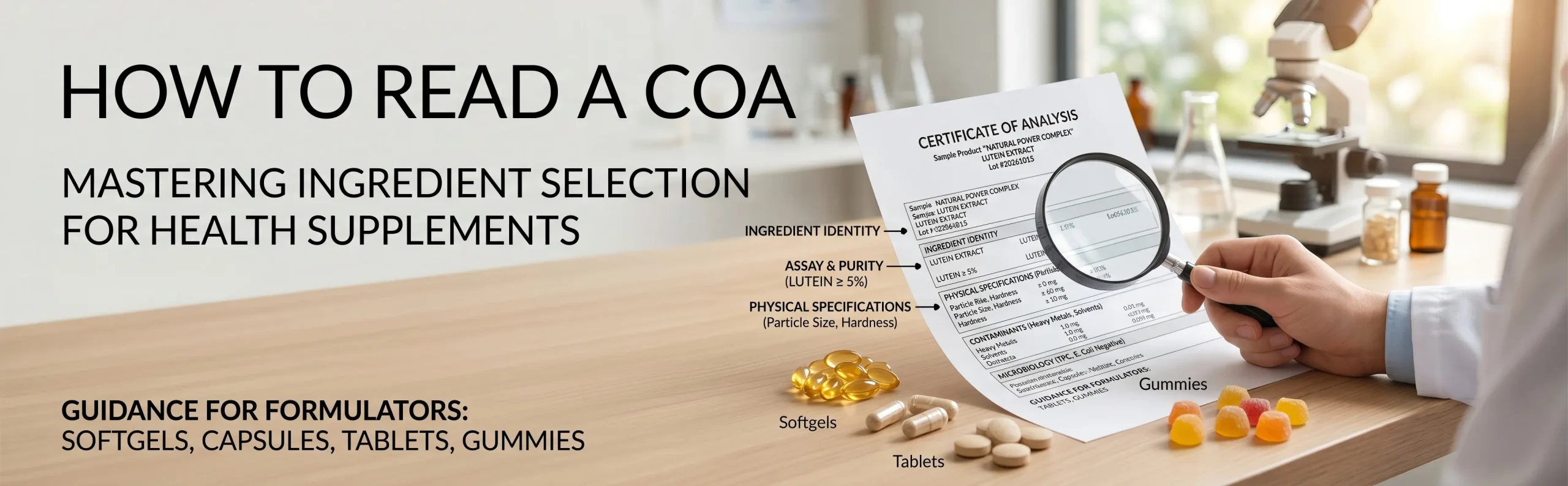
In the nutraceutical and functional food sectors, a Certificate of Analysis (COA) is more than a compliance document—it is your roadmap to ingredient quality, safety, and reliability.
At KS NutriPharm, we help you interpret COAs so you can make informed sourcing and formulation decisions with confidence.
1. Key COA Parameters: What to Look For
Identity & Assay: Confirm the Active Compounds
The assay section validates the active ingredients that drive your product’s efficacy.
- Standardized Extracts vs. Ratios: Standardized extracts (e.g., Quercetin 95%) ensure consistent active content batch-to-batch, unlike simple ratios (e.g., 10:1), which can be misleading.
- Testing Methodology:
- HPLC (High-Performance Liquid Chromatography): Preferred for precise quantification of markers like Ginsenosides or Curcuminoids.
- UV-Vis Spectrophotometry: Useful for broader content estimation, but may be influenced by non-target compounds.
- GC (Gas Chromatography): Best for volatile oils and fatty acids.
✅ Tip: Always compare the method used with the target marker—this affects label claims and efficacy.
Physical & Chemical Properties: Ensuring Process Compatibility
Understanding physical characteristics helps avoid issues during manufacturing.
Ash Content (Total & Acid-Insoluble Ash)
- Total Ash: Represents the total inorganic residue after combustion.
- Acid-Insoluble Ash (AIA): Measures siliceous materials like sand or soil contamination.
Hidden Risks:
- Excessive AIA can indicate poor raw material washing or environmental contamination.
- Inconsistent Total Ash between batches may signal adulteration with fillers.
- Always cross-check both parameters—misleading values may hide impurities or reduce efficacy.
Moisture Content (Loss on Drying)
- High moisture can cause clumping and microbial growth.
- Properly dried powders maintain free-flowing characteristics and long-term stability.
✅ Tip: Verify both moisture and ash content to prevent downstream formulation issues.
Safety Profile: Contaminants & Microbial Control
For health-impacting products, safety is non-negotiable. Verify that testing aligns with regional and international standards (USP, EP, ChP).
- Heavy Metals: COAs should demonstrate compliance with local regulatory thresholds.
- Pesticide Screening: Confirm the range and methods (e.g., LC-MS/MS, GC-MS/MS).
- Microbiological Limits: Look for TPC, yeast, mold, and pathogen results appropriate for intended use.
✅ Tip: Transparent COAs provide both limits and test methods, which reduces risk in audits and market entry.
Process Transparency: Solvents and Carriers
A professional COA should note:
- Extract Solvents: Water, ethanol, or CO₂-based extraction with trace solvents below regulatory limits.
- Excipients/Carriers: Disclosure of maltodextrin, rice flour, or fibers ensures a clean-label formulation.
✅ Tip: Clear documentation allows for faster product development and supports consumer-facing claims.
2. Evaluating Supplier Reliability
High-quality COAs are only part of the equation. Use these signals to identify a trustworthy supplier:
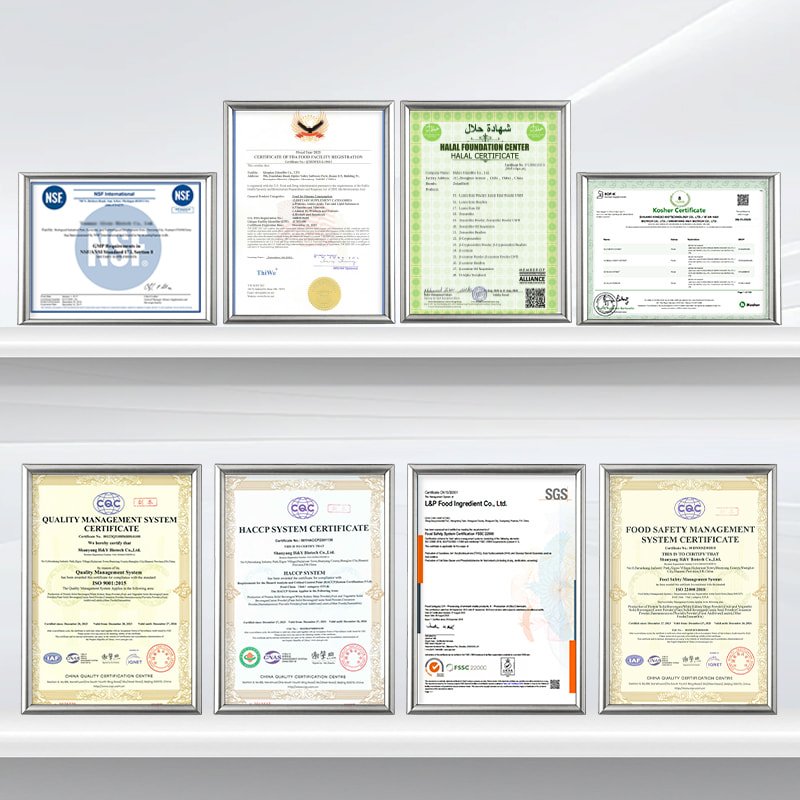
- Third-Party Testing: Verified results by ISO 17025 accredited labs or independent laboratories.
- Batch Traceability: Ability to track each lot from harvest to final drum.
- Technical Dossiers: Availability of MSDS, TDS, and other supporting documents.
- Compliance Alignment: COA demonstrates adherence to DSHEA, EC regulations, and local standards.
✅ Tip: Ask for a sample COA before ordering larger batches to validate consistency.
3. Common COA Pitfalls to Avoid
- Over-reliance on ratio extracts: A 10:1 ratio does not guarantee consistent active content.
- Incomplete microbial testing: Total Plate Count alone is insufficient for premium markets.
- UV-only assay claims: May overestimate marker content due to interference.
- Unreported excipients or solvents: Can affect clean-label status and allergen claims.
Recognizing these pitfalls protects your brand and ensures “first-time-right” formulations.
4. Compliance Overview: Multi-Market Standards
Our COAs and testing protocols cover international and regional standards, ensuring ingredients are suitable for multiple markets:
| Region / Standard | Coverage Notes |
| USA | DSHEA-compliant; GRAS self-affirmed options available |
| EU | EC 396/2005 (pesticides) and EC 1881/2006 (contaminants) compliant |
| China | Aligned with the Health Food Raw Material Directory and GB standards |
| Japan / SEA | Functional food classification verified |
| Internal / Company Standards | Stricter in-house limits for heavy metals, moisture, and microbial load |
Need full method details and limits? Contact Us to Download our Technical Documentation Checklist →
5. Next Steps: Access Advanced Technical Support
For R&D teams and QA managers seeking deeper insights:
- Stability Data & Shelf-Life Profiles
- Non-GMO & Allergen Declarations
- Traceability and Sustainability Reports
- Liposomal / Enhanced Delivery Verification
Explore our advanced documentation library → Contact Us to Download Technical Resources
KS NutriPharm Commitment
We provide transparent COAs that meet regulatory requirements while supporting your brand integrity.
Our goal is to reduce risk, simplify formulation, and help you bring compliant, high-quality products to market.